Artist Interview
Jon Elliott
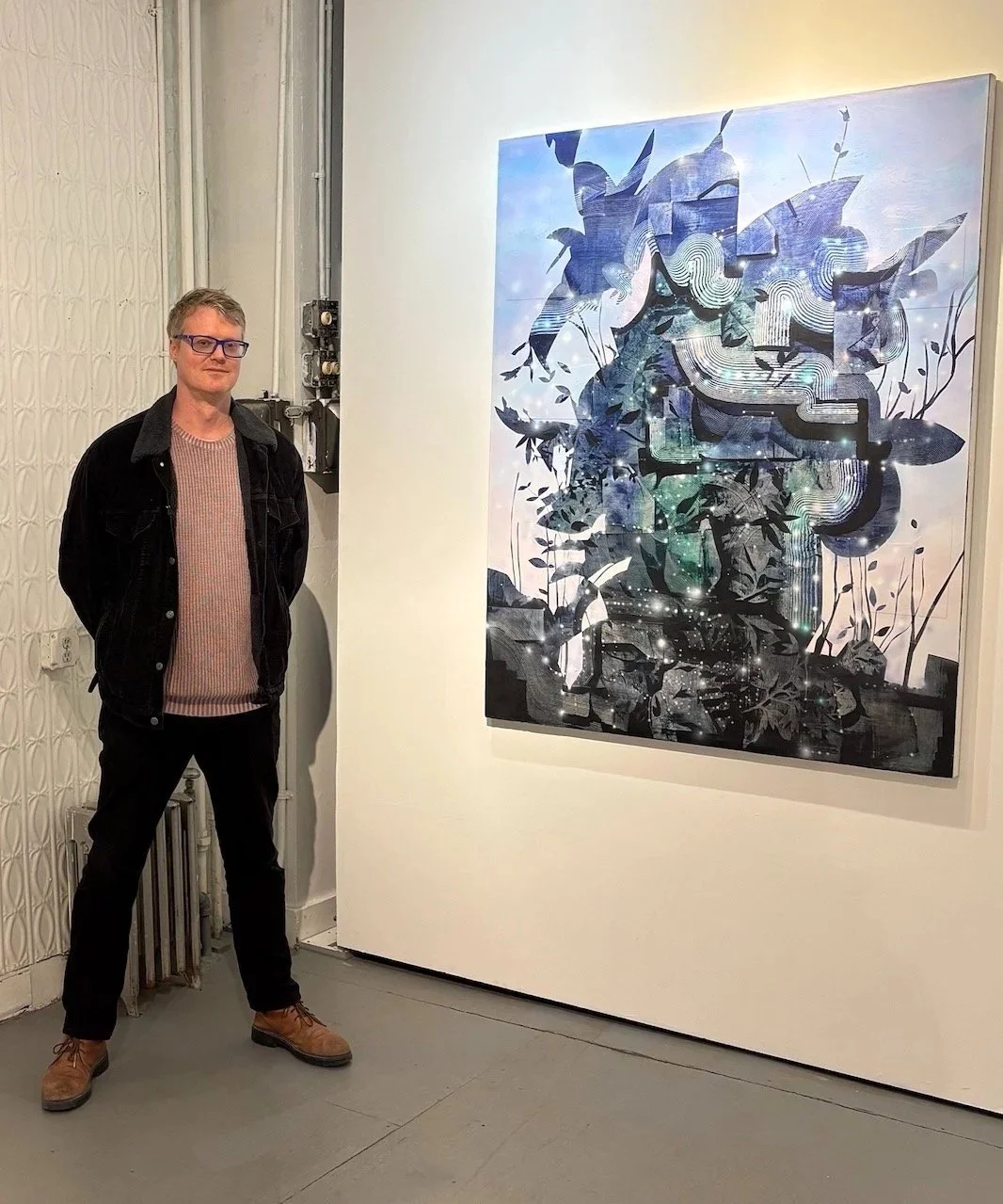
We spoke with artist Jon Elliott on the occasion of his solo exhibition, “Wildlife Analysis,” currently on view at Lorimoto Gallery. In the conversation that follows, he reflects on his path from his restless childhood to a life in New York City , the influences that shaped his practice, and the ideas driving his current body of work.
Lorimoto Gallery (LG): Can you briefly describe your childhood—where you were born, where you grew up, and what your early creative interests were? Any early influences you’d like to mention, art-related or not?
Jon Elliott (JE): I was born in a small town in Iowa, in a two-room hospital that no longer exists. I only lived there for the first two weeks of my life before my parents took off for Bozeman, Montana, where my dad went to graduate school. We moved around a few more times—I learned to swim in Lake Champlain at Red Rocks Beach in Burlington, Vermont, for instance—and then we ended up in the suburbs of Atlanta, where I went to high school and then to Georgia State University for undergrad.
I was always interested in filling up my school notebooks with drawings. I also had a really good high school art teacher who supported her students by paying for a lot of the art supplies with her own money. I didn’t think of myself as an artist until I started taking some art classes at Georgia State. Even before that, I spent a lot of time in the art section of the library. GSU has a great library, and I spent a lot of time there going through art books when I should have been studying for the science and math classes I was enrolled in. I assumed I’d be in the medical field or somewhere in the sciences, and that’s what I was pushing for; those were the classes I was taking. I had a scholarship that paid my tuition, so I decided to take a break from my main focus and take some art classes.
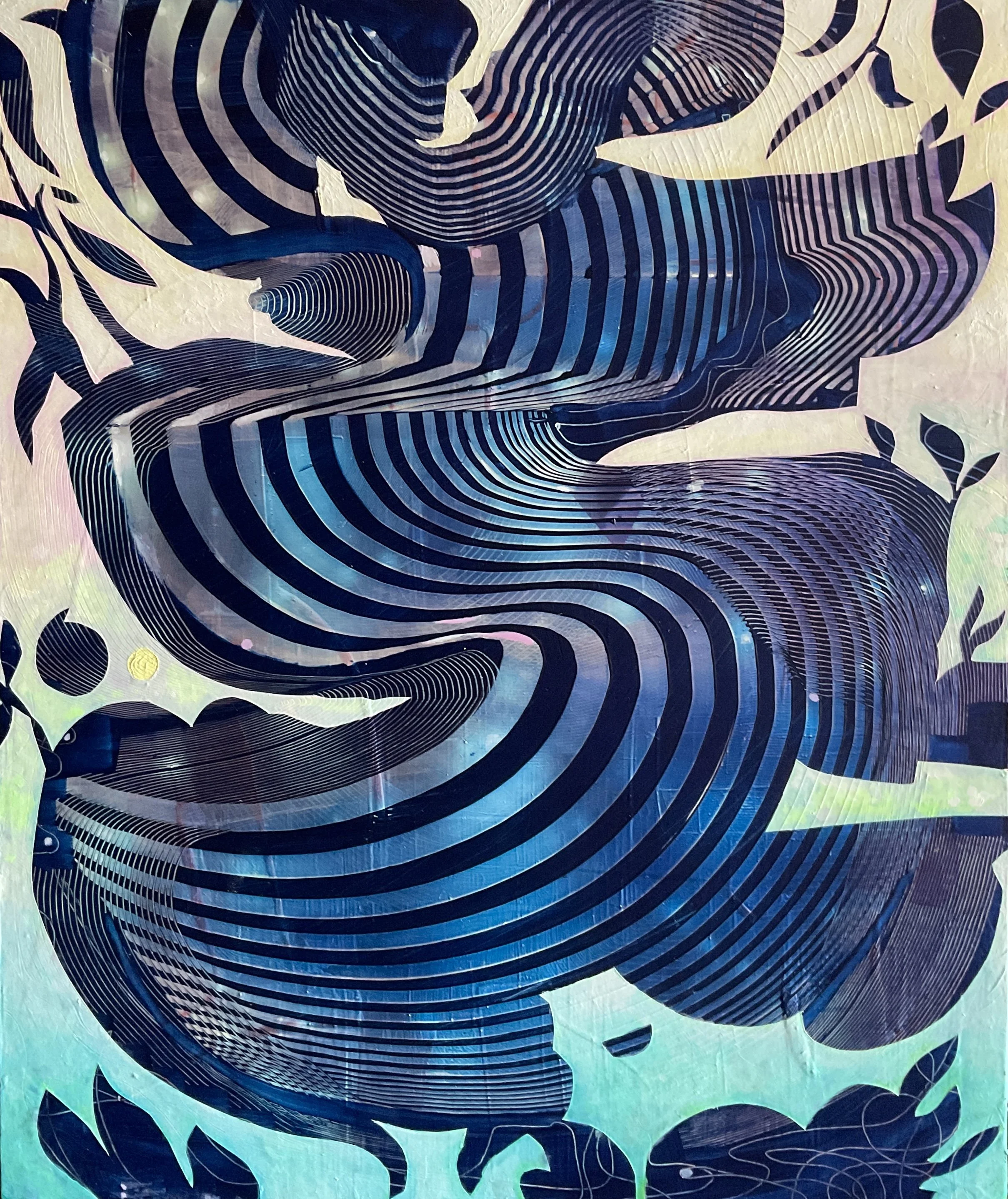
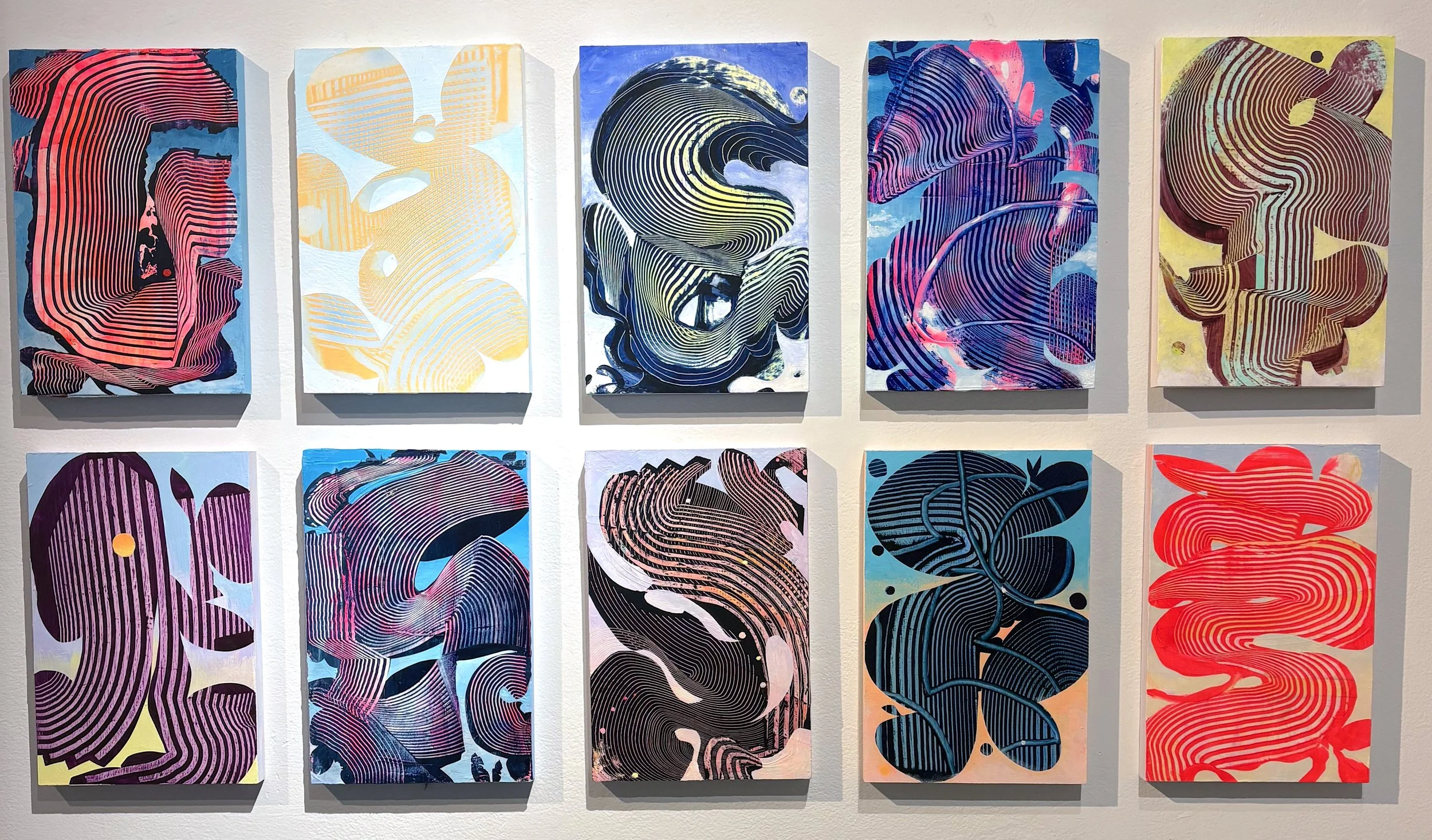
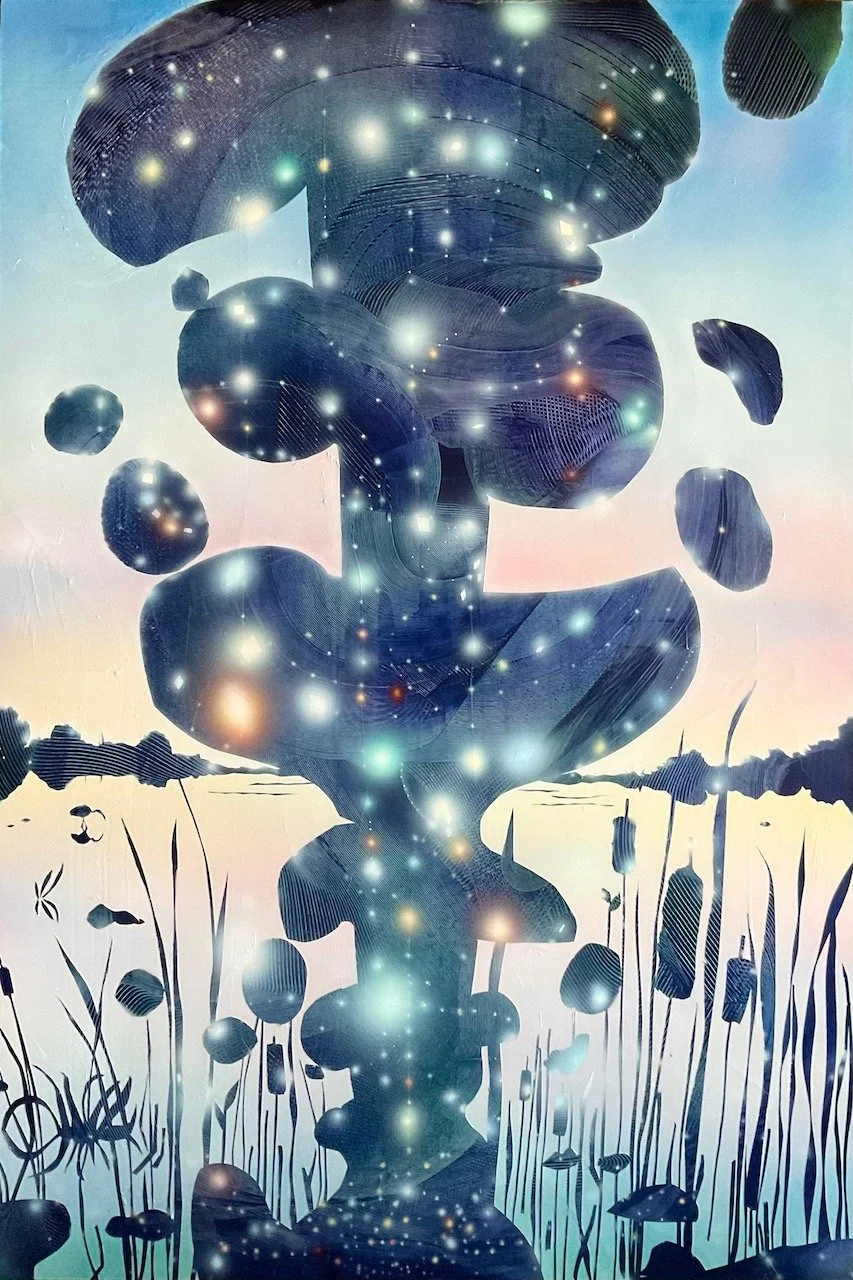
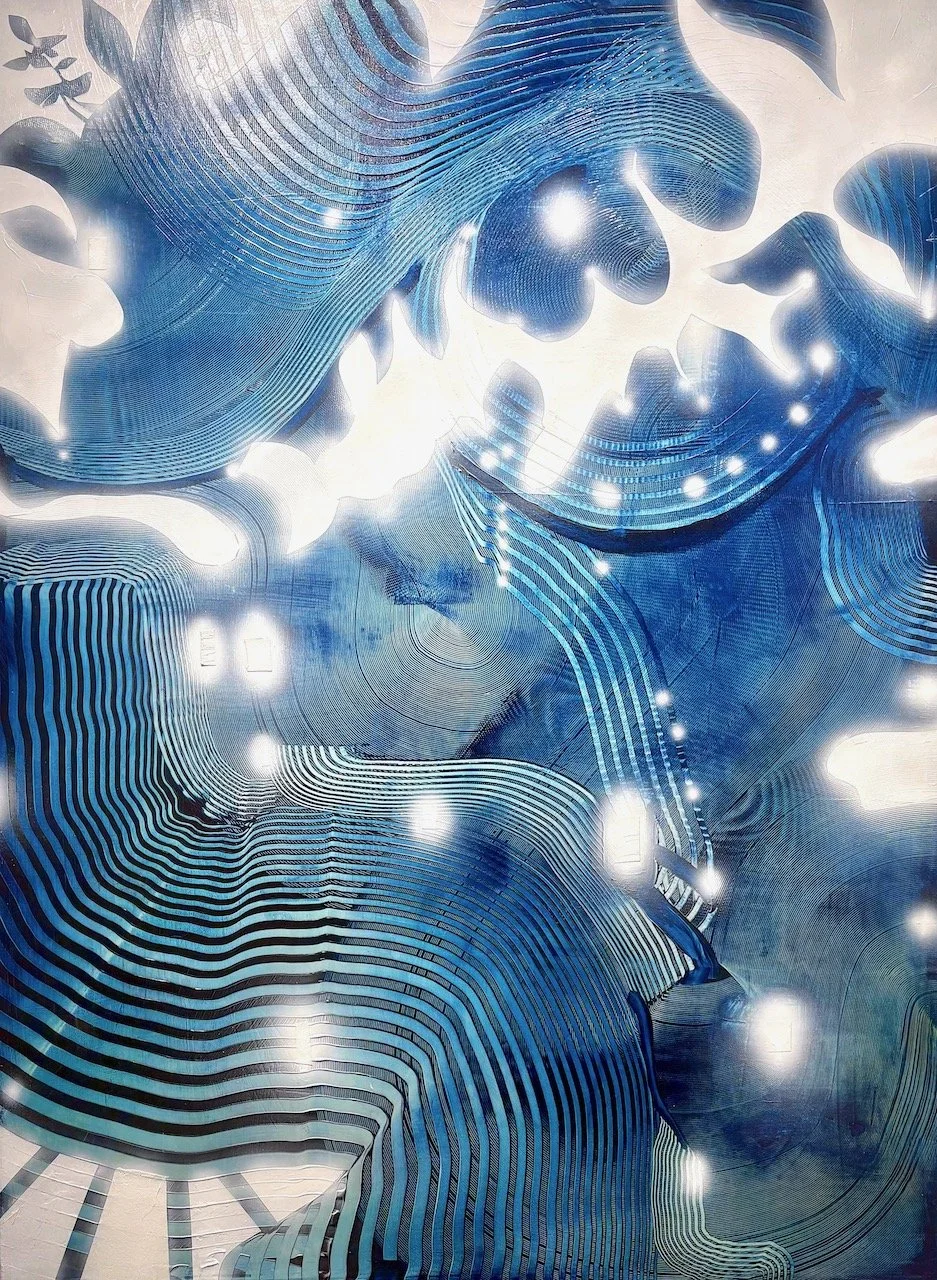
LG: How would you describe the linear qualities in your work—the sense of energy, conduits, grooves, wandering paths?
JE: Ever since I started making art I’ve been drawn to technical, grid-based patterns and hard-edged geometry. I use these human-made patterns and shapes to create abstract virtual environments and quirky flora/fauna-type beings. I don’t normally talk about my paintings like this, but I think it ends up being this way.
I say “human-made” because the patterns and geometry I use are not readily found in nature, outside of human nature. These are patterns and geometry that we invented to help us abstract nature, to simplify the vast complexity of our lives.
When I first started making paintings, I was representing a type of materialism that suggested that everything we know of, and even the way we feel about everything—from our sense of awe about the absurd vastness of the universe to the way we love our friends and families—is created by extraordinarily complex patterns of elementary particles and energy.
I wanted to make paintings of these patterns and I wanted to depict these patterns in the process of becoming fleeting emotions and tangible spaces and beings within those spaces. I thought of them as informatic beings.
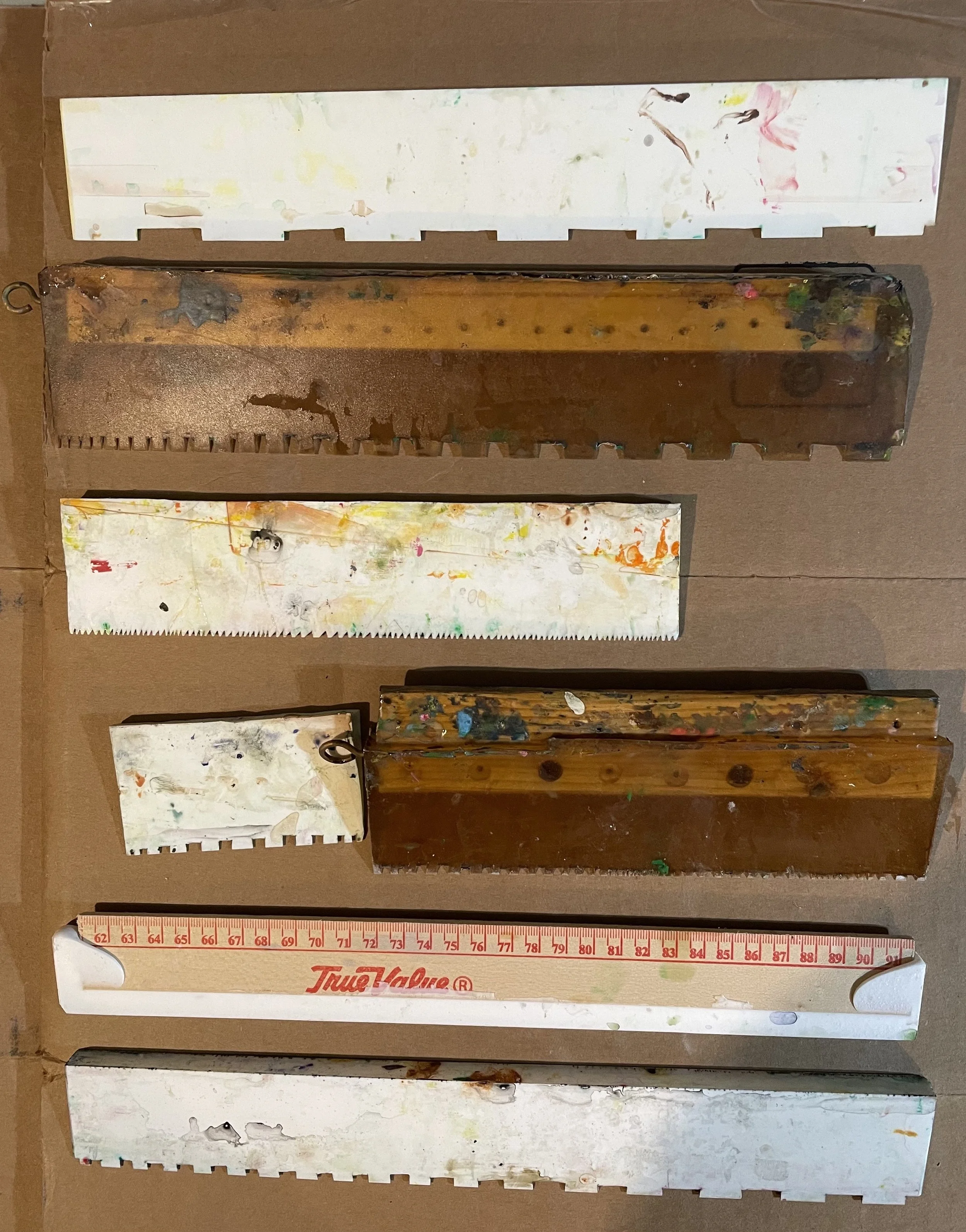
Hand made painting combs
LG: Can you talk about the glow or light effects in your paintings?
JE: The light effects are something I’ve been doing in my paintings for years. They’ve changed in meaning over the years as well. They started as a way to give light diffusion glows around some of my shapes, and to suggest backlighting. They were also used to suggest city lights at night.
They already had a “stars at night” feel to them at times as well. As I started making patterns again with the combing tools, and the images I made became more and more nebulous and abstract, the airbrushed lighting became much more of a “stars at night” or energy traveling along in conduits, and less of a “city lights” feel. But I still want all of those to be true
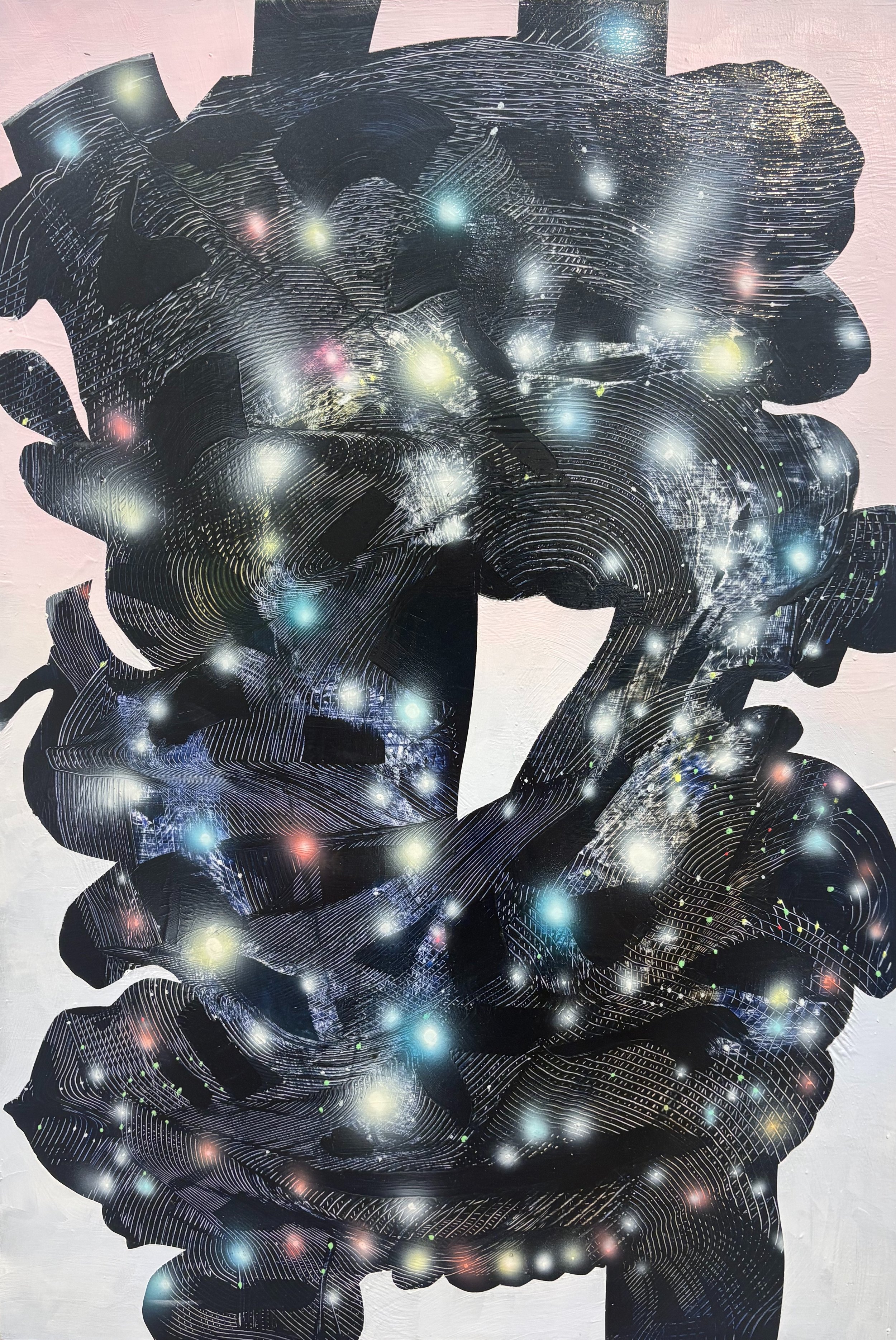
LG: What is the story behind the title of the show, “Wildlife Analysis”?
JE: It’s the title I gave to one of my paintings and comes from a track on a Boards of Canada album from the ’90s that was very influential on me when I was starting to make paintings and starting to think of myself as an artist for the first time. When I was trying to come up with a show title, I just decided that maybe this was a nice homage to the idea of beginnings and becoming something new.
LG: What do you imagine your next body of work might include? Are there experiments you’re interested in pursuing?
JE: One experimental possibility is to reincorporate ceramics into my practice. I have a few ideas on how to do it, but I’ve only taken small steps so far. Probably nothing like that any time soon. I’m still in the midst of this current project and have too many things I want to try within this project before I start on anything like that.
LG: Are there artists or peers you particularly respect or admire right now?
JE: The great thing about NYC is that there are hundreds of peers I respect and admire living here and having shows, etc., all the time.
As far as early influences, I don’t think I had any strong art influences until I started going into those library books. I specifically remember a big blue tome about Yves Klein, and what a strange art practice he had—fairly outside of the art history I knew about at the time. I wasn’t really into the work as much as I was struck by the thought that there was so much art history I was unaware of, and that this was something I wanted to know about. Also, a giant Donald Judd book caught my attention, and I was inspired by the fact that he wrote and thought about art a lot more than the simple structures he was creating would suggest. His work also seemed to fit in with the electronic minimal music I was interested in.
Later, after taking art classes for a while, films began to influence me quite a bit. Wong Kar-Wai’s Chungking Express was influential on me, for instance, and I loved the color and image quality of the movie Tetsuo: The Iron Man 2. Music was also extremely influential as I was getting more into electronic and ambient music.
LG: What did your education look like after high school?
JE: After getting a degree from Georgia State, I went to RISD for a graduate degree in Painting/Printmaking, and moved to NYC right after graduating in 2001.
LG: When did you realize you wanted to pursue art as a profession?
JE: I started to think of myself as an artist at some point in my early 20s. The art profession for me has been a mixed-media hodgepodge of various art-related jobs, some creative, some just labor, mixed with some occasional painting and ceramics sales. I gather this unpredictable mix of incomes and activities together and call it a profession.
LG: What originally drew you to New York City?
JE: I’m sure I’m biased because I’ve invested half my life in NYC, but I think it would be hard or even next to impossible for me to do the things I want to do anywhere else. I was drawn to NYC because I felt it was where other people like me want to go, because of all the creative energy. Not just in the art world, but music, culinary, etc. So many ambitious creative projects sprouting up everywhere.
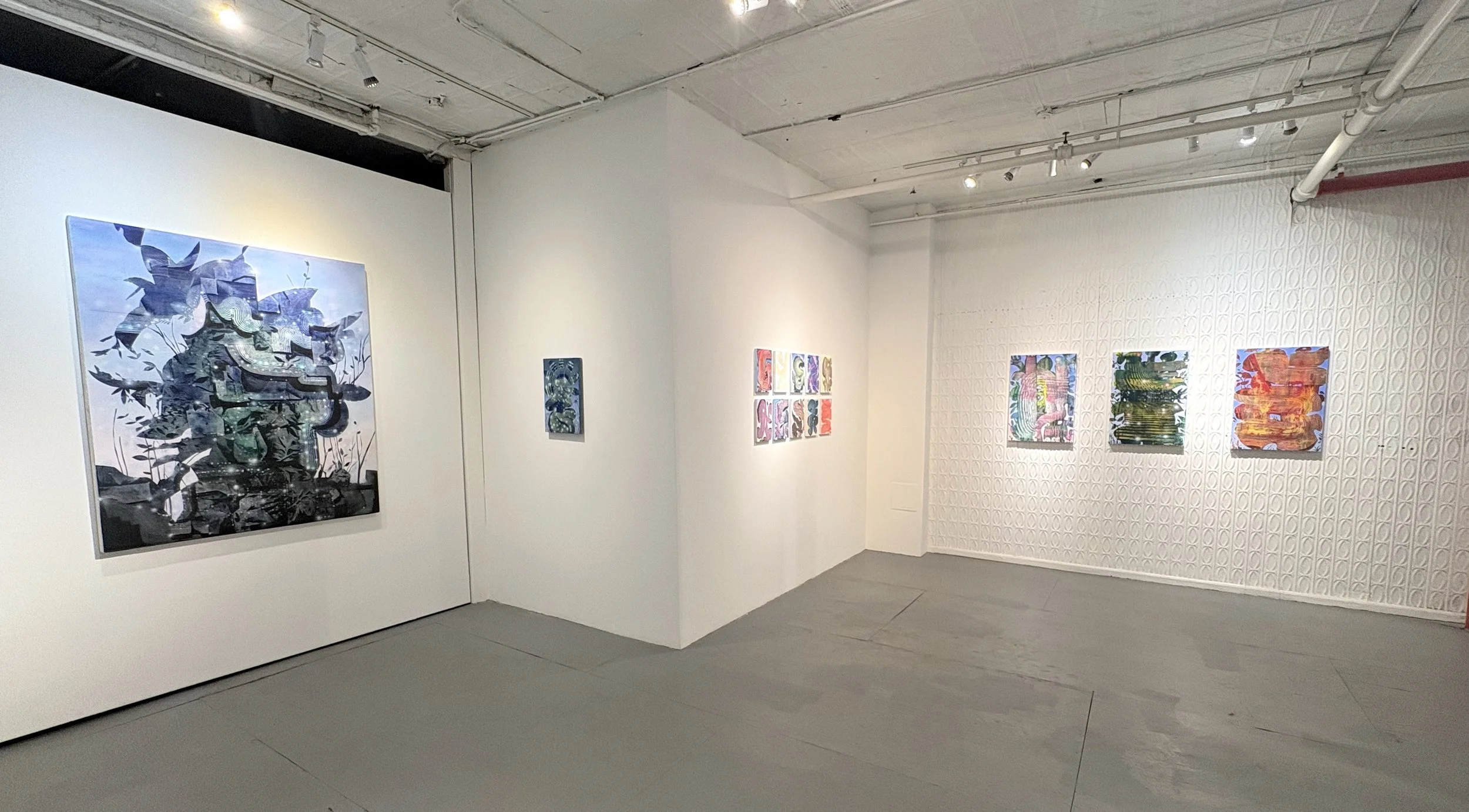
LG: Can you describe the bodies of work included in this exhibition?
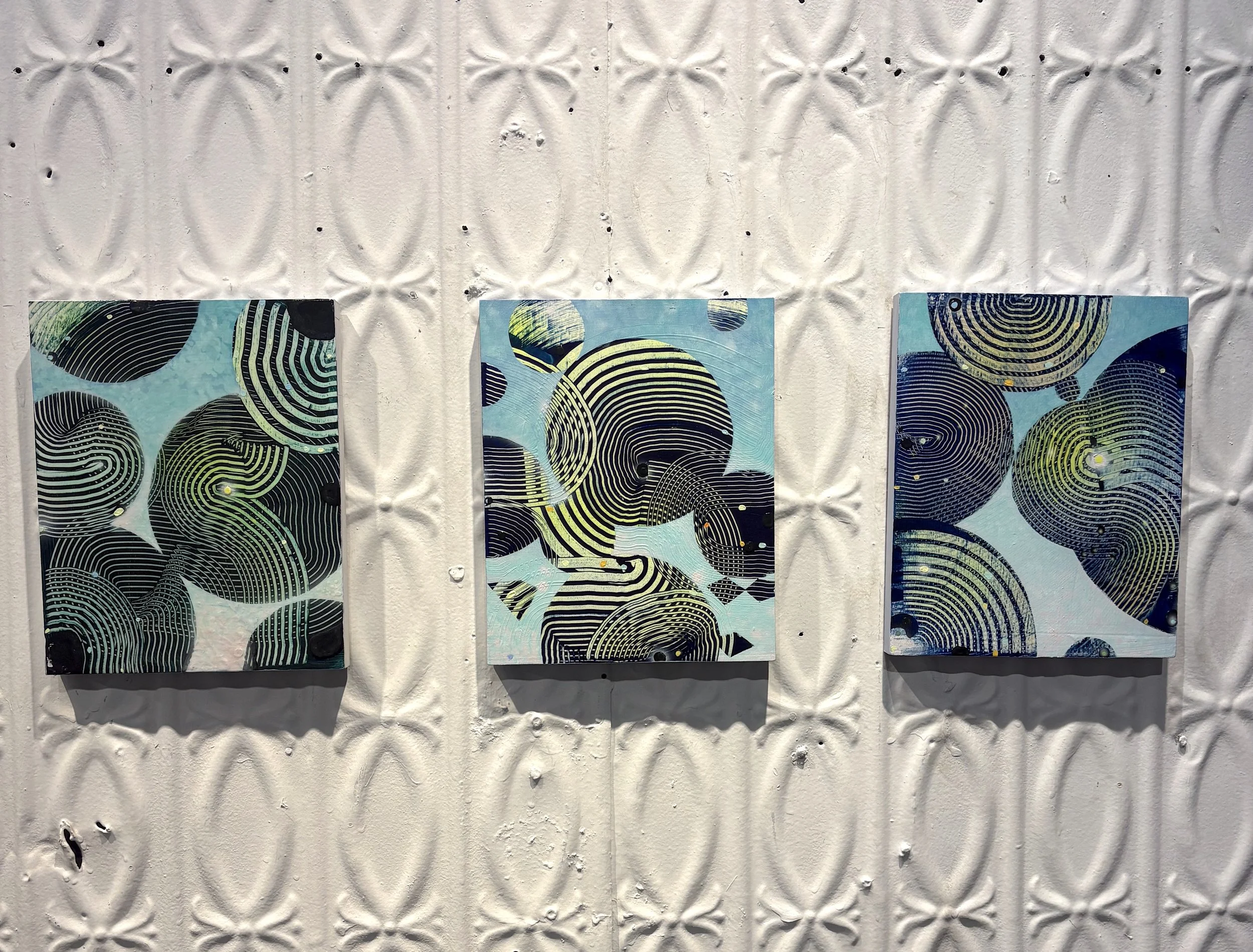
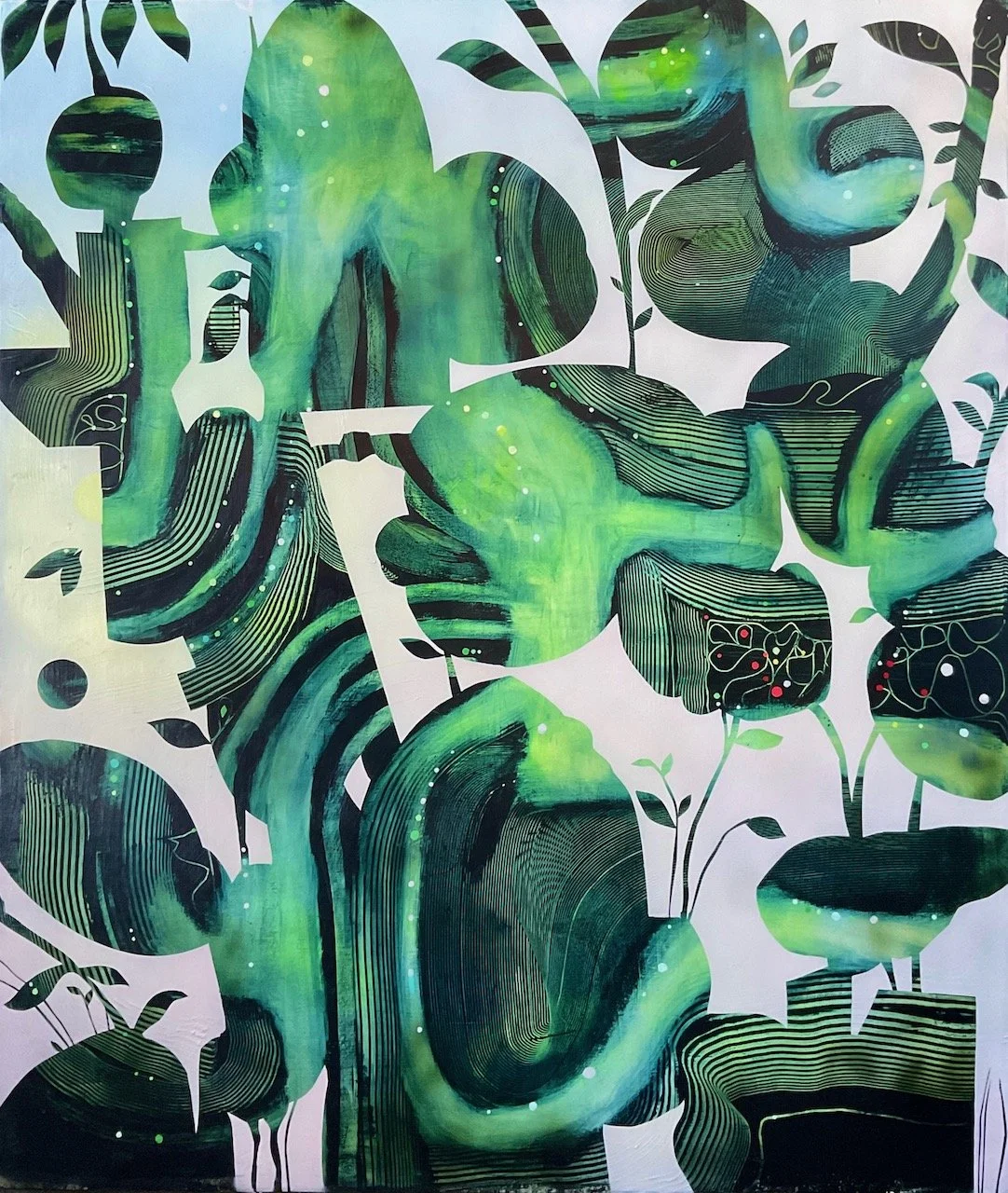
JE: I sort of see three different series. The three paintings in the back alcove area are the oldest at about two years old, and they’re the pieces that started the rest. I have a large body of work that consists of small works on panel that I’ve made to help me more quickly work through some of the hundreds of ideas I have. There are, I think, 23 of these smaller paintings in this show.
And then there are the most recent works on paper, a body of work I started over last summer, again to allow me to move quickly through ideas and also take up less space than paintings on panels. I make so much work that storage is a constant challenge. I’ve mounted these paintings on paper to panels for this show because I wanted to include them, but they work better with the rest of the show and feel more substantial to me being mounted to panels.
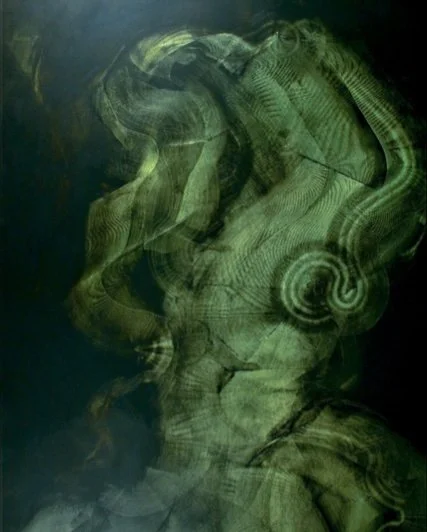
Early 2000’s work , Inspired by the linear style and combing technique
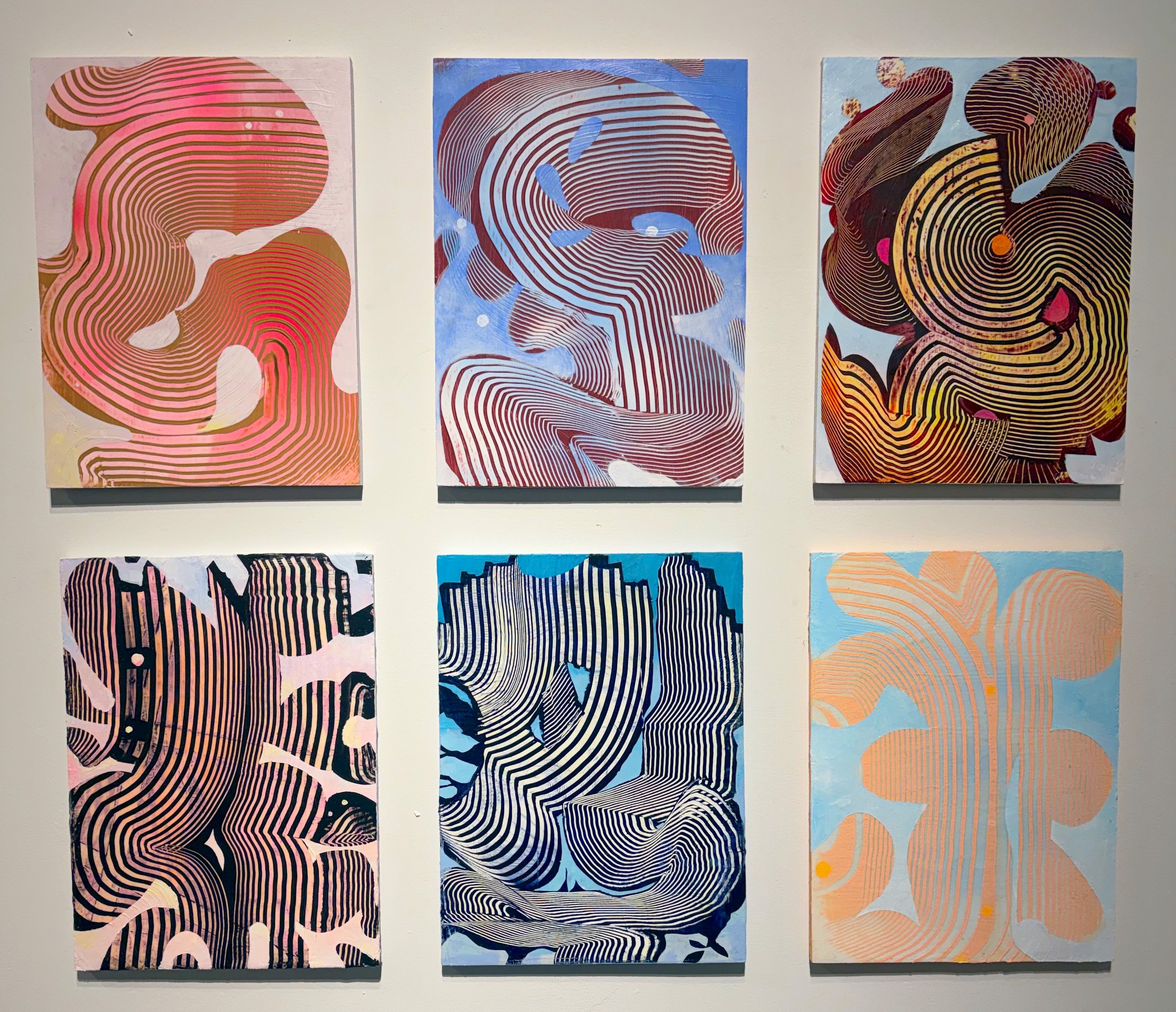
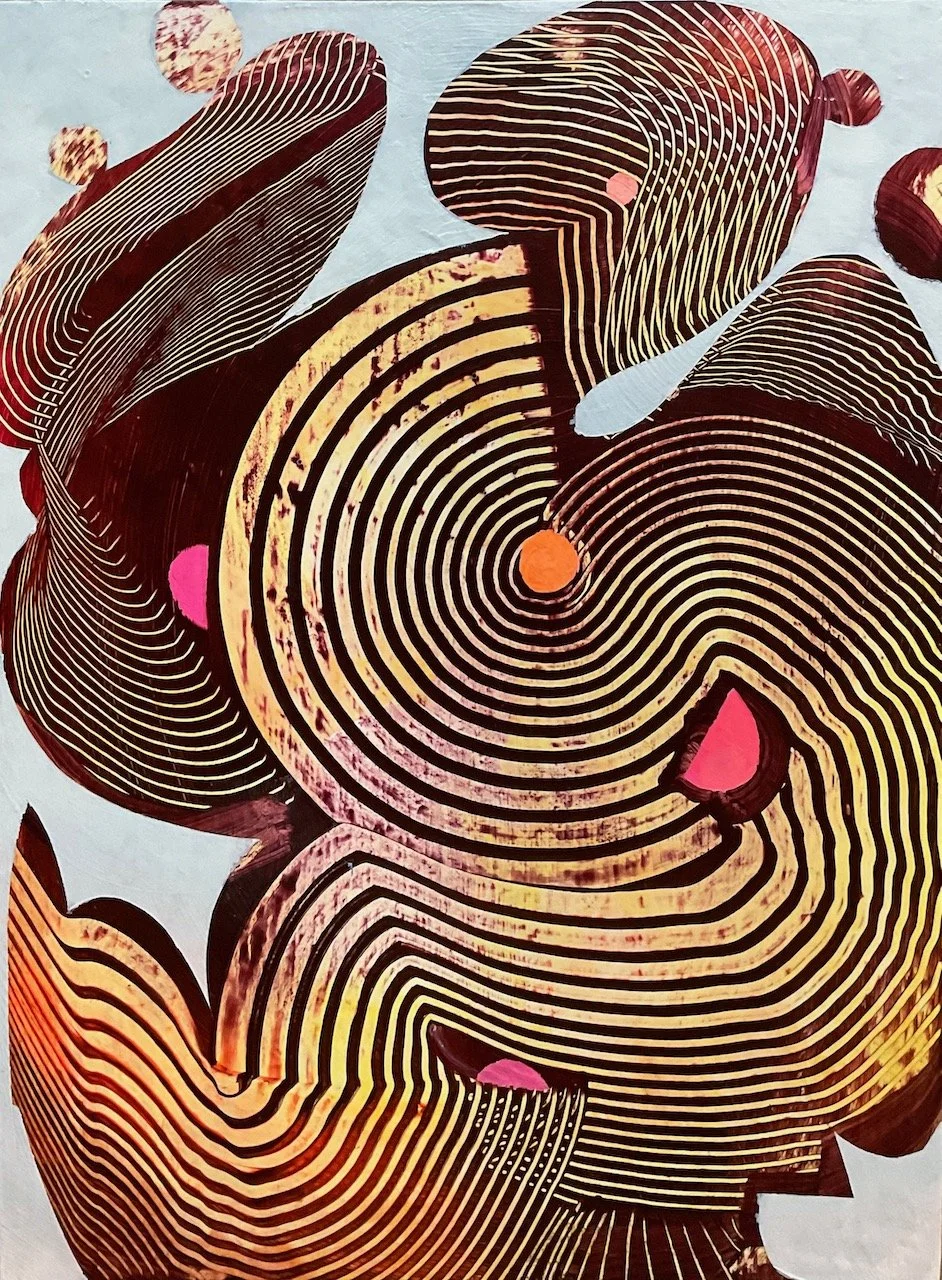
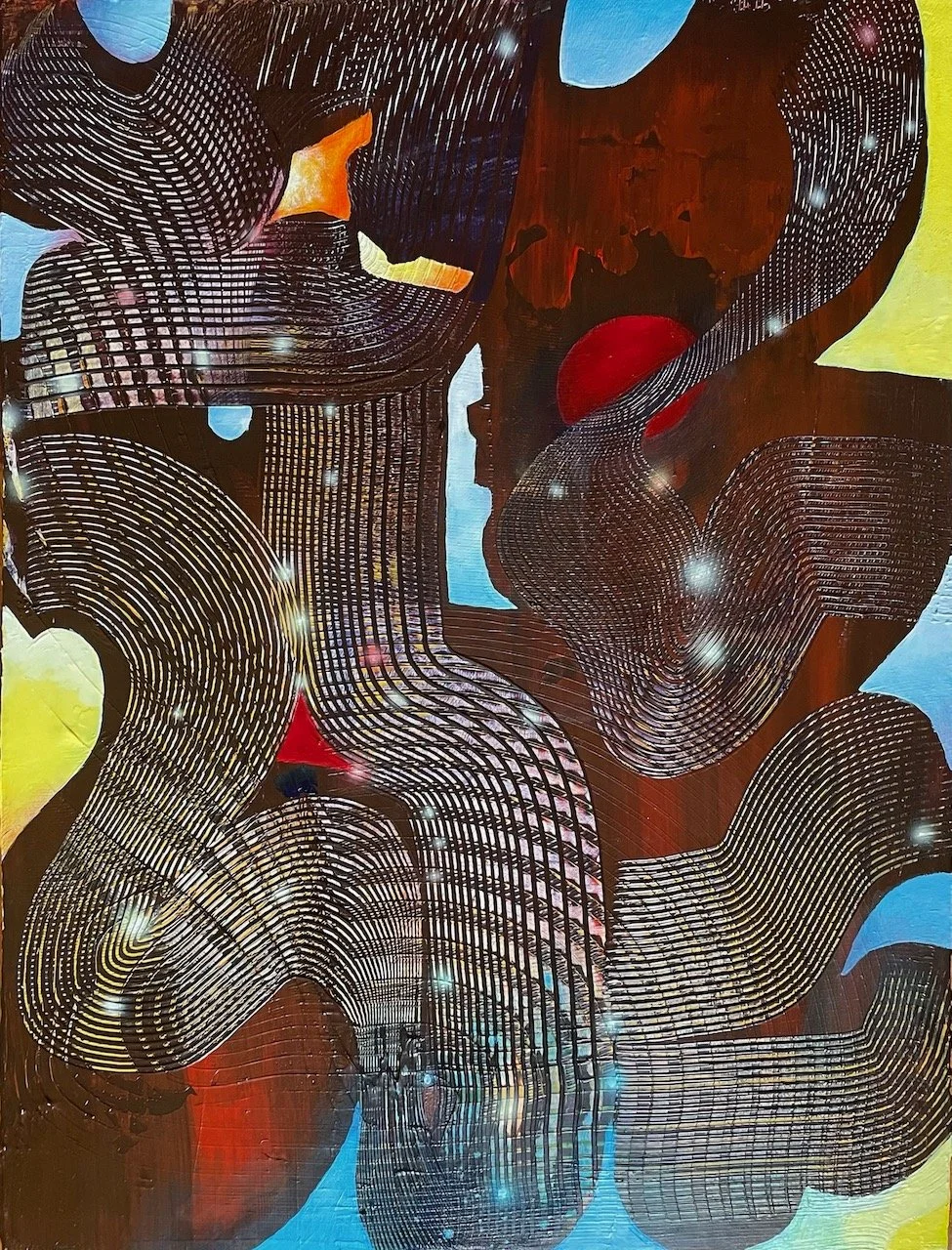
I started making painting tools to create these patterns in 2001, and one tool I made was a combing tool that I could use to scrape away wet oil paint and create very tight striations and woven grid patterns that ended up creating moiré patterns as well. So I started making my spaces and beings using these tightly woven patterns.
Then I had to move to a new studio, and one consequence is that I abandoned this project with the combing tool and started on a new iteration of my project. A few years ago I pulled out my books of old slides from the ’90s and early 2000s. There were several images of the paintings I made using this combing tool I had made. Here is a painting from, I think, 2002 that was 60 inches tall.
Several of these paintings are wrapped up in my storage rack and have moved with me to a few different studios over the years, but I’d forgotten about them. When I saw these slides I was surprised by how much I liked them and started thinking about how I might be able to revive this old project and use some of the ideas, and the comb tool, and integrate it into my current painting project. So I started experimenting and making new combing tools with various gradations. And now I’m making patterns with these tools again after abandoning the project almost half my life ago.
The different line widths in my new gradation combs started to suggest different metaphors, like conduits and grooves, etc.
LG: What are your current influences? What motivates you to keep painting and expressing these visions?
JE: In many ways my practice self-generates motivation for me. Each new group of paintings suggests new things I want to try. But music is still a big influence as well.
I haven’t talked about the influence of music much, but many of my ideas about patterns, rhythm, growth, flows, improvisation, etc., come out of music. I’m an omnivorous music listener. The way a handful of notes can create intricate structures of thought and feeling mirrors what I want to do with my paintings.